The Best Canny Alternatives for Product Feedback in 2026

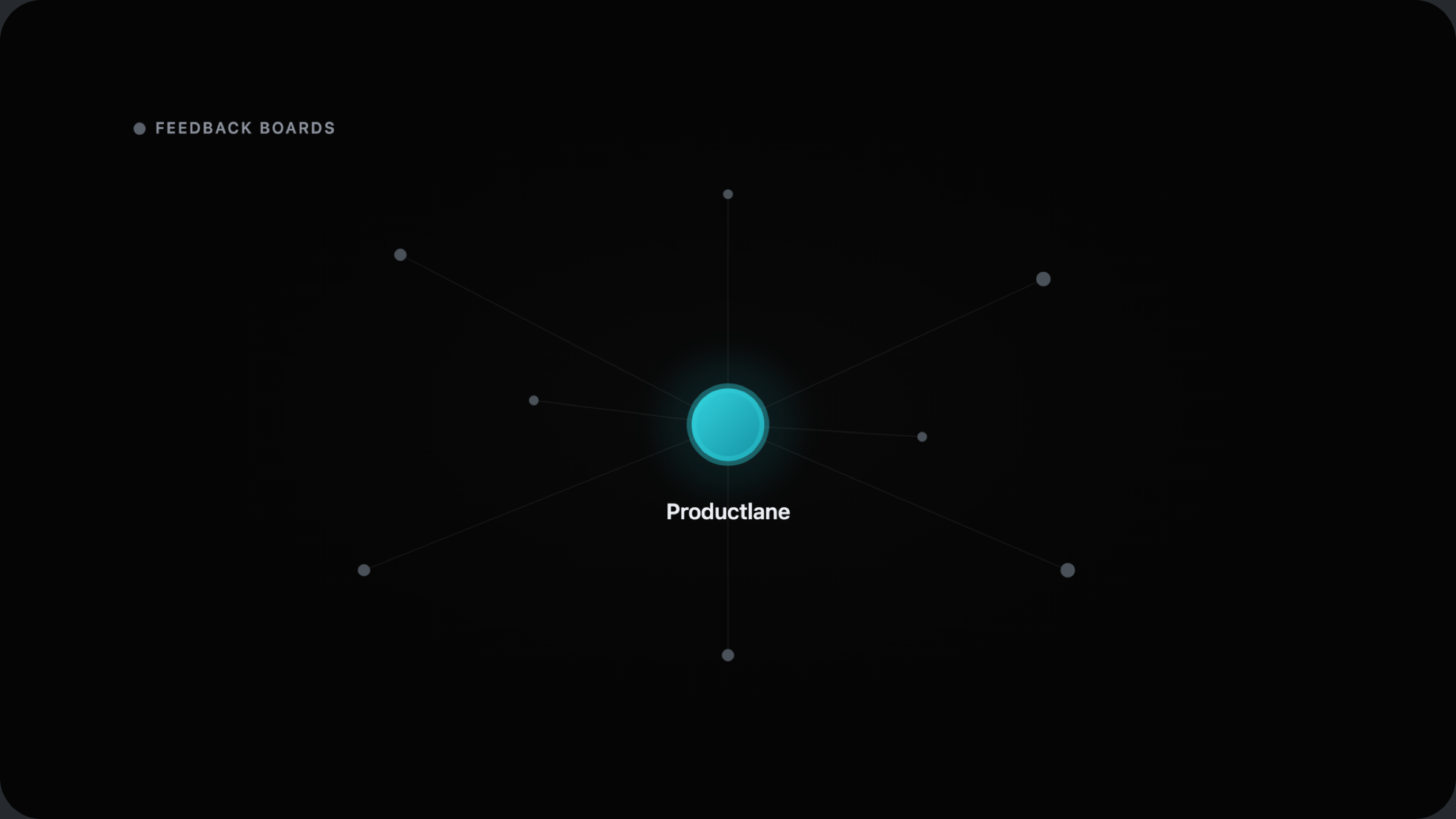
Productlane connects customer feedback to autonomous software support. Its agent uses product knowledge from the codebase to answer questions, while feature requests remain linked to the customers who raised them. For B2B software companies, this puts feedback beside the conversations that explain it.
What Canny offers today
Canny combines feedback boards with Autopilot, which captures and deduplicates feedback from conversations. It offers issue-tracker integrations, including Linear. It is therefore inaccurate to assume every Canny request needs to be copied into engineering by hand.
The free plan covers 25 tracked users. Pro starts at $79 per month on annual billing, with pricing tied to tracked users. A tracked user is associated with feedback, not simply everyone registered in your product. Canny pricing and limits.
Seven Canny alternatives
| Tool | Best fit | Pricing and AI billing |
|---|---|---|
| Productlane | Autonomous AI resolutions for software companies, especially B2B | From $29/user/month, billed yearly. AI: $0.79 per resolution beyond the plan allowance. |
| Featurebase | Combined helpdesk and product feedback | Free plan; Growth $29/seat/month, billed yearly. Fibi $0.49/AI resolution. |
| Frill | Feedback boards with roadmaps and surveys | Startup displayed at $25/month for 50 ideas. Check billing cadence and add-ons. |
| Nolt | A focused board with a roadmap | Essential $29/month, billed yearly, for one board. |
| Upvoty | Small teams collecting feature requests | Power $15/month, billed monthly, with one project and unlimited tracked users. |
| Productboard | Product organizations managing prioritization | Plans vary by product and maker seats; request the applicable plan price. |
| Fider | Teams choosing an open-source feedback tool | Self-hosted open-source option; budget hosting and maintenance. Hosted service priced separately. |
Productlane
Choose Productlane when customer requests should stay close to support and engineering. The agent can explain existing functionality using codebase-derived knowledge. A genuine request for new behavior can become a Linear issue with its customer context attached. You can begin with the feedback workflow and expand how you use the agent as your knowledge is ready.
Featurebase
Featurebase now combines feedback with a helpdesk and Fibi AI. Compare it as a support-and-feedback platform, rather than a standalone board. Its lower listed AI resolution price makes it important to test answer quality and actual plan requirements alongside the price.
Frill
Frill is worth evaluating for a focused feedback board with a roadmap and announcements. It also offers surveys. Check the idea allowance and any privacy or branding add-ons that your team needs.
Nolt
Nolt suits teams that want a board with predictable plan pricing. Its published Essential plan includes a roadmap. Advanced integrations, including Linear, are listed on Pro. Choose by the workflow you need rather than board count alone.
Autonomous support for software companies
The Productlane Agent answers detailed product questions with knowledge from your connected codebase.
Try the agentUpvoty
Upvoty's Power plan is aimed at solo founders. Its published limits include one project with unlimited boards and tracked users. It is a candidate when collecting requests is the primary job.
Productboard
Productboard fits a product organization evaluating prioritization and planning. Check the applicable product package and maker-seat requirements. Its buying decision is broader than selecting a public voting board.
Fider
Fider is an option for teams that want an open-source feedback tool. If you self-host, assign responsibility for operations and upgrades. Compare those costs with the hosted service.
Autonomous resolutions for software companies
Productlane focuses on resolving software support questions autonomously, with a particular focus on B2B. The Productlane Agent learns how your product works from your connected codebase. That gives it product knowledge for questions about settings, permissions, or behavior that a short help article may leave unanswered.
Product knowledge from your codebase
Through the GitHub connection, Productlane reads the repository you select to create reference articles for the agent. These describe the product your customers use. They stay outside the public help center, while articles marked internal remain excluded from the customer agent's knowledge. The agent uses this product knowledge to explain what a customer should do.
Your team controls what knowledge the agent can use. Review generated articles before relying on them for sensitive workflows. Connecting a repository supplies product context; it does not give customers repository access.
Measure completed resolutions
Evaluate the agent on your own software questions, with one resolution definition, your real ticket mix, and a fixed observation period.
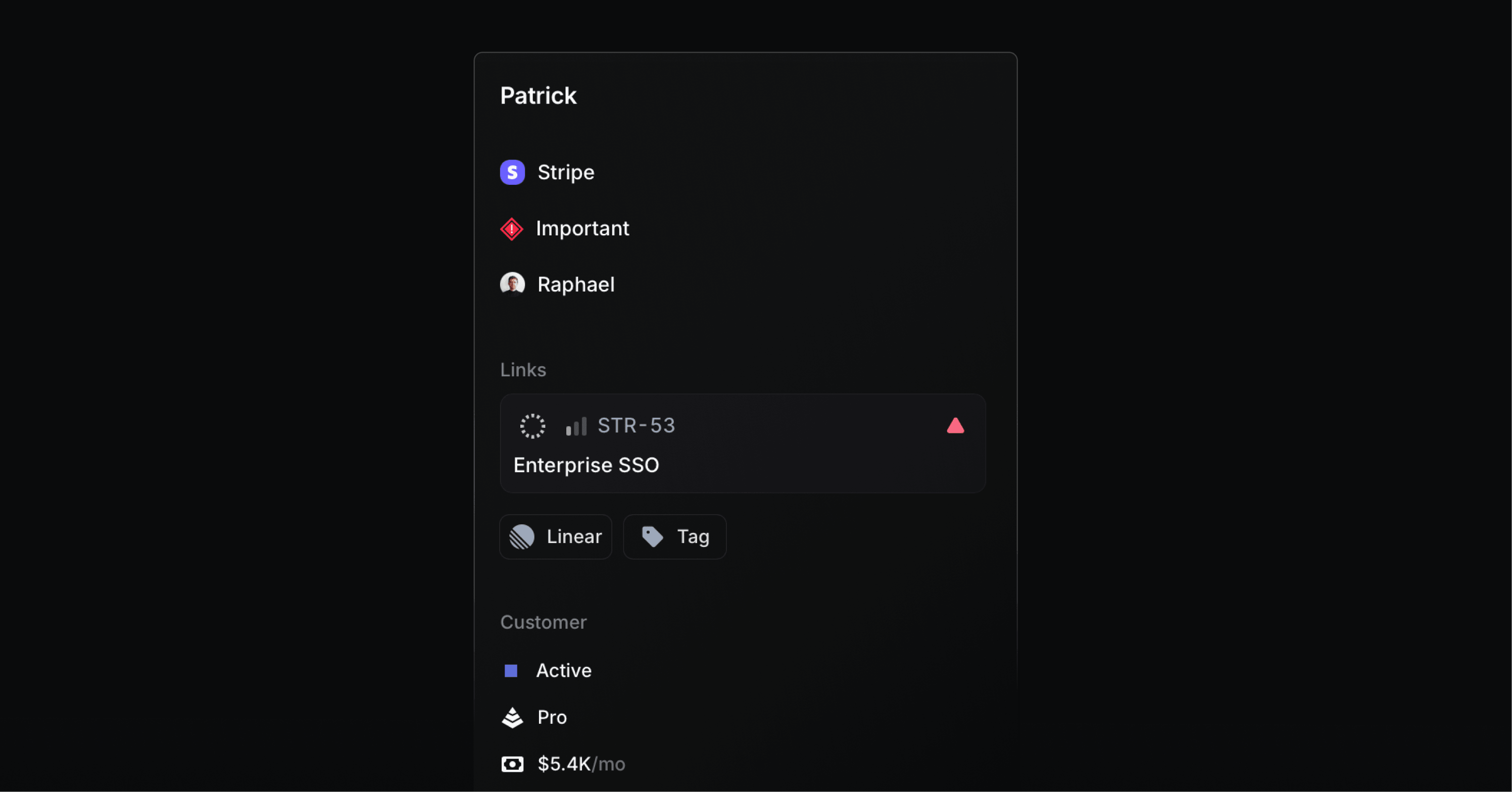
When a question needs an engineering change, the agent can file a Linear issue with the conversation attached. Productlane prepares a customer follow-up when the linked work ships. That engineering workflow supports the main goal: more customer questions resolved autonomously.
See the Productlane Agent or how to evaluate an AI support agent.
Choose by what happens after feedback
Bring one real request to each trial. Capture it from the channel where it arrived, attach the requesting company, and find any duplicate. Then check how the request reaches engineering and how a customer learns about the result.
For Productlane, also bring a question that sounds like a feature request but can be solved with existing functionality. Resolving that question immediately is valuable in its own right. The feedback workflow remains available when the product actually needs to change.
Frequently asked questions
Evaluate the feedback workflow first if that is your immediate need. Productlane also provides a support inbox and an autonomous agent, so you can assess those against your existing setup before changing channels.
No. Its current offering includes a helpdesk and Fibi AI alongside feedback. Compare the current platform and its plan limits.
Productlane focuses on autonomous software support using codebase-derived knowledge. Feedback stays connected to support conversations and Linear work. Canny focuses on collecting and managing product feedback, including automated capture.
Try Productlane with a real customer request.
Perfect autonomous user experiences.
- Autonomous AI support for software companies
- Product knowledge from your connected codebase
- An inbox for the conversations that need your team